

DHN 2027
Necmettin Erbakan University, Turkey
Title : Acute and Subacute Effects of Vibration Applied to the Forearm and Tenar Region in Healthy Individuals Without Sensory Problems
Abstract:
The aim of this study is to investigate the effects of local vibration applied to the forearm and thenar region in healthy young individuals on superficial electromyography (sEMG) parameters and hand grip and pinch strength in the acute and short-term (subacute) periods. This study is a single-group, repeated-measure, quasi-experimental study. Sixty-five healthy volunteers were included in the study. Measurements were taken at three time points: before vibration (BV), immediately after vibration, and 5 minutes after vibration. The average age of participants was 21.81±6.99 years, and 53.8% were female; the vast majority were right-handed (95.4%). A significant difference was found in pinch force according to the time factor (F=4.451, p=0.005, pη²=0.065). In pairwise comparisons, a significant decrease in pinch force was observed between the VÖ and 60-second measurements (mean difference = -1.682, p = 0.020). In contrast, no significant changes were observed between times in sEMG parameters (work average, rest average, peak average, etc.) and handgrip strength (p > 0.05). In healthy young individuals, local vibration applied to the forearm and thenar region did not significantly alter sEMG measures or handgrip strength within a short time window; however, it was associated with a transient decrease in pinch force, particularly at 60 seconds. The findings suggest that the effects of local vibration may be sensitive to the parameter and measurement time and may produce short-term inhibition/fatigue-like responses in fine motor outputs.
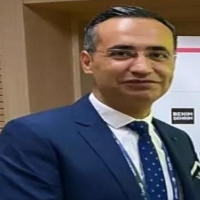
Biography:
Musa Çankaya is a faculty member in the Therapy and Rehabilitation Department at Necmettin Erbakan University Seydişehir Vocational School of Health Services. He completed his undergraduate studies in Physiotherapy and Rehabilitation at Süleyman Demirel University in 2011 and received his master's (2016) and doctoral (2023) degrees from the Physiotherapy and Rehabilitation Department at Muğla Sıtkı Koçman University. He received his associate professorship in 2026. His academic work focuses on orthopedic rehabilitation, sports physiotherapy, musculoskeletal disorders, electrotherapy, telerehabilitation, physical activity counseling, and artificial intelligence-assisted health applications.