
Address: Av. Diagonal, 161, 163, Sant Martí, 08018 Barcelona, Spain

Psychology Congress 2027
Capital Medical University Xuanwu Hospital, China
Title : The Risk of Subliminal Message Propagation in AI-Generated Videos
Abstract:
The rapid proliferation of AI-generated videos introduces a novel vector for subliminal messaging—visual or auditory cues embedded below conscious perception. Unlike traditional media, generative models can seamlessly insert imperceptible triggers during synthesis, enabling large-scale, personalized, and deniable influence campaigns. This abstract examines the technical feasibility of subliminal injection in diffusion‑based and GAN‑generated videos, the psychological susceptibility to such stimuli, and the resulting ethical and regulatory gaps. We argue that current detection methods are inadequate, and propose a framework for risk assessment, emphasizing the need for transparency standards and real‑time monitoring to mitigate covert manipulation in synthetic media.
Biography:
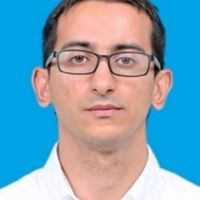
Dr. Kadir Uludag is a researcher specializing in applied psychology, currently engaged in postdoctoral studies at the Capital Medical University. He earned his Ph.D. in Applied Psychology from the Chinese Academy of Sciences. Dr. Uludağ's research interests encompass schizophrenia, drug addiction, and educational psychology. He has also explored the intersection of psychology and technology.