
Address: Zone Hoteliere 2 Allee Du Verger Roissy En France, 95700, Paris, France

Neurology 2026
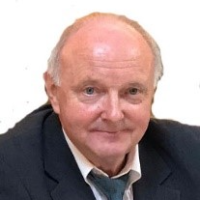
University of Regensburg, Germany
Title : Managing healthcare transformation towards intelligent and ethical personalized, preventive, predictive, participative precision medicine ecosystems
Abstract:
The ongoing healthcare transformation enables early identification, proactive intervention and full understanding of the course of disease, i.e., its pathology and its effective treatment. It advances traditional care towards personalized, preventive, predictive, participative precision medicine (5PM) or systems medicine, thereby considering individual health status, conditions, genetic and genomic dispositions in personal social, occupational, environmental and behavioral context. The resulting health ecosystem is interdisciplinary, highly dynamic and complex, managed by experts from multiple knowledge and policy domains, deploying their methodologies, terminologies and ontologies at different levels of maturity, knowledge, skills and experiences. The intersections of these components present inherent challenges, driven both from lack of shared expertise and from inherent miscommunications across disciplines, resulting in incompatible or incomplete solutions that frequently fail or fall short of their potential. The domains include medicine and life sciences, natural and social sciences, bioinformatics, economy, ecology, and engineering, thereby integrating research and practice. To enable flexibility and re-usability, a reference architecture must be defined along different levels of abstraction or views and clearly defined separation of concerns, as specified in ISO/IEC 10746, ISO/IEC/IEEE 42010 or the Rational Unified Process (RUP). Thereby, different languages with grammars at different level of generative power, expressivity and constraints must be deployed from domain-specific, context-aware natural languages with high generative power and less constraints through context-sensitive up to regular ones such as programming languages to develop and implement the intended ecosystem. To enable knowledge-driven, cross-domain interoperability and system integration as required for transformed health ecosystems, the development process must be combined with the multi-domain representation of the system. ISO 23903 Interoperability and integration reference architecture – Model and framework, developed by the author, defines such approach. The solution is mandatory for any specification or project at ISO, CEN, IEEE, etc. addressing more than just one domain. The presented approach enables design, implementation and management of intelligent and ethical health and social care systems as well as knowledge-based communication and cooperation of all actors involved. Thereby, it manages also security, privacy and trust in detail. The Keynote introduces necessary standards and methodologies for designing and managing 5P medicine ecosystems as well as practical examples. The presented solution was also applied in many other domains, such as nursing education, nanotechnology, pharmaceutical R&D, astrophysics, environmental sciences, etc.
Biography:
Dr. Bernd Blobel studied Mathematics, Technical Cybernetics and Electronics, Bio-Cybernetics, Physics, Medicine and Informatics at the University of Magdeburg and other universities in the former GDR. He received his PhD in Physics with a neurophysiological study. Furthermore, he performed the Habilitation (qualification as university professor) in Medicine and Informatics. He was Head of the Institute for Biometrics and Medical Informatics at the University of Magdeburg, and thereafter Head of the Health Telematics Project Group at the Fraunhofer IIS in Erlangen. Thereafter, he acted until his retirement as Head of the German National eHealth Competence Center as well as Head of the globally unique International Interdisciplinary PhD and PostDoc College at the University of Regensburg. He was and is still leadingly involved in many countries health digitalization as well as electronic health record strategy. He published more than 600 papers, published/edited many books and supervised a big number of PhD students from all around the world. He was German Representative to many SDOs such as HL7, ISO, CEN, OMG, IEEE, ASTM, SNOMED, etc., also chairing the national mirror groups. Furthermore, he still engaged in international higher education. He is Fellow of several international academies and played specific roles in global organizations such as WHO, European Commission, UNESCO, etc. He is also Visiting Professor at the Charles University in Prague.