
Address: Zone Hoteliere 2 Allee Du Verger Roissy En France, 95700, Paris, France

Neurology 2026
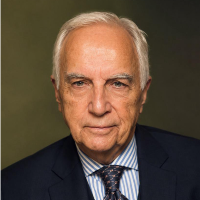
University of Suffolk, UK
Title : Brain 2.0
Abstract:
The presentation will cover trends and concepts such as, Trends in Neurology, Cognitive Neuroscince, AI-driven Neural Decoding, The Wet Logic of Cells, Whole-Brain Digital Twins and Neuro-Symbolic Brain Models. Cognitive neuroscience technologies use special tools to read, map, and change human brain activity to understand how we think, memorise, and feel.
Today, this field is merging with Artificial Intelligence (AI) and cutting-edge engineering to create a future where humans can control computers with their minds, heal deep psychological wounds, and even upgrade their natural intelligence. AI models no longer just look at statistics; they explicitly decode complex neural patterns.
In the future, AI will help decode high-level abstract cognitive entities, like exactly what you are paying attention to or what you are visualising in your memory. This will allow for hyper-personalised digital therapy tools.
The talk will then proceed to cover issues like, Non-Invasive Neural Mapping, Neurobiology, Neuro-Robotics, Neurogenetics and Synthetic Biology. Neurobiology and neurosciences form the scientific study of the nervous system.
Neurobiology focuses on the biological and cellular mechanisms of nerve cells, while neuroscience is a broader umbrella discipline that also integrates psychology, computation, and cognitive science to understand behaviour and brain function. The future of neurobiology centres on merging high-resolution brain mapping, human stem cell-derived organoids, and advanced artificial intelligence to decode complex neural circuits. This convergence aims to deliver personalised treatments for neurological and psychiatric disorders. The future of neurobiology and behaviour focuses on merging high-resolution brain mapping, stem cell models, and artificial intelligence to link cellular neural dynamics directly with complex, real-world actions.
This integration aims to decode how organism-environment interactions shape mental health, movement, and cognition.
The keynote will then move on to dissect areas like,Neuroimaging, Nano-Neuroscience, Intelligent Neural Nanorobots, Nano-Biosensors, Nano AI-Systems. Finally, I will also tackle Nano-Neural Computing and Quantum Nano-NS.
Biography:
Professor Luiz Moutinho (BA, MA, PhD, MAE, FCIM) is the Visiting Professor of Marketing at The School of Business, Arts, Social Sciences and Technology University of Suffolk, Ipswich, England, UK, at The Marketing School, Portugal, an Adjunct Professor of Marketing, GSB, FBE, University of the South Pacific, Suva, Fiji
In 2020 he was elected as the member of The Academia Europaea. In 2017 he received a degree of Prof. Honoris Causa from the Univ. of Tourism and Management Skopje, North Macedonia. In 2024 was rated among the 100 best scientists in Business and Management by Research.com.
During 2015 - 2017 he was professor of BioMarketing and Futures Research at the DCU Business School, Dublin City University, Ireland. This was the first Chair in the world on both domains - BioMarketing and Futures Research. Previously, and for 20 years, he had been appointed as the Foundation Chair of Marketing at the Adam Smith Business School, University of Glasgow, Scotland.
He completed his PhD at the University of Sheffield in 1982. He has been a Full Professor for 35 years and held posts at Cardiff Business School, University of Wales College of Cardiff, Cleveland State University, Ohio, USA, Northern Arizona University, USA and California State University, USA. He has held Visiting Professorship positions at numerous universities in China, Lithuania, Austria, New Zealand, Denmark, Slovenia, Portugal, Hungary, Taiwan, Brazil, Colombia, Fiji and Cyprus.
Between 1987 and 1989 he was the director of the Doctoral Programmes at the Confederation of Scottish Business Schools and at the Cardiff Business School between 1993 and 1996. He was director of the Doctoral Programme in Management at the University of Glasgow between 1996 and 2004.
Professor Moutinho is the Founding Editor-in-Chief of the Journal of Modelling in Management (JM2) and Co-editor-in-Chief of the Innovative Marketing Journal. He has another 4 associate editorships as well as being in the editorial boards of another 47 international academic journals.
His areas of research interest encompass marketing and management futurecast, artificial intelligence, biometrics and neuroscience in marketing, futures research algorithmic self, EmoWear - a wearable tech device that detects human emotions, evolutionary algorithms, human-computer interaction, the use of artificial neural networks in marketing, modelling processes of consumer behaviour and tourism futurecast.
He has developed a number of conceptual models over the years in areas such as tourism destination decision processes, automated banking, supermarket patronage, among other areas. The testing of these research models has been based on the application of many different statistical, computer and mathematical modelling techniques ranging from multidimensional scaling, multinomial logit generalised linear models (GLMs) and linear structural relations to neural networks, ordered probit, simulated annealing, tabu search, genetic algorithms, memetic algorithms and fuzzy logic.
Prof. Moutinho has given keynote speeches, lectures, seminars, talks, etc. in 49 countries worldwide. Prof. Moutinho has 39 books published, and over 161 articles published in refereed academic journals. He has 171419 academic citations, the h-index of 60 and the i10-index of 166 (Google Scholar, August, 20th, 2024).