

Nano 2027
Catholic University of Brasilia, Brazil
Title : Revisiting the Disc Diffusion Assay: The Case of Doped Tin Oxide Nanoparticles
Abstract:
This keynote talk is focused on transition metal-doped (Cu) tin oxide (SnO2) spherical nanoparticles (mean size 8.3 nm), which were synthesised and tested against two bacterial cultures, namely the Gram-positive Staphylococcus aureus (S. aureus) and the Gram-negative Escherichia coli (E. coli). The traditional disc diffusion-test bioassay is revisited from the perspective of using a mathematical approach grounded on the standard as well as on the modified Hill model. Importantly, the Hill model was established in 1910 to account for the binding of oxygen molecules to haemoglobin and since then has been used as a standard model for evaluation of a wide plethora of experimental situations, including cell viability assays. Although limited in terms of variety of challenging materials and bacterial cultures, the success of the proposed mathematical approach in explaining the experimental data is quite impressive. The outcomes of the present analysis point quite favourably toward the general use of it in the very near future. New concepts, such as the biological size and the biological size dispersity, for instance, will emerge naturally from the data analysis reported in the talk.
Biography:
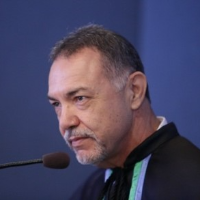
Paulo C. De Morais (H-63), PhD, was full Professor of Physics at the University of Brasilia (UnB) – Brazil up to 2013, Appointed as UnB’s Emeritus Professor (2014), Appointed as Guest Professor of Huazhong University of Science and Technology – China (2011), Visiting Professor at Huazhong University of Science and Technology (HUST) – China (2012-2015), Appointed as Distinguished Professor at Anhui University (AHU) – China (2016-2019), Appointed as Full Professor at Catholic University of Brasília (UCB) – Brazil (2018), Appointed as CNPq-1A Research Fellowship since 2010. 2007 Master Research Prize from UnB, 2008 member of the European ERA NET Nanoscience Committee, Member of the IEEE-Magnetic Society Technical Committee, Senior Member of the IEEE Society, 2012 China’s 1000 Foreign Expert Recipient, and 2012 Academic Excellence Award from Brazilian Professors’ Union. He held a two-year (1987-1988) post-doc position with Bell Communications Research – New Jersey, USA and received his Doctoral degree in Solid State Physics (1986) from the Federal University of Minas Gerais – Brazil. He graduated in both Chemistry (1976) and Physics (1977) at UnB. Professor De Morais is a member of the Brazilian Physical Society and the Institute of Electrical and Electronics Engineers (IEEE).