
Address: Hans-Grade-Allee 5, 12529 Schonefeld b. Berlin, Germany

Nano 2026
National Centre for Physics, Pakistan
Title : Synthesis of Al2O3-ZrO2-CuO Nano-Composites for the treatment of carcinogenic dyes from waste water
Abstract:
The synthesis, characterization and photocatalytic efficiency of non-traditional Al2O3-ZrO2-CuO-TiO2 nano-photocatalysts are reported. The Al2O3-TiO2 support was loaded with different percentages of CuO and ZrO2. A perfect agreement was found between the band gaps of the synthesised nanocomposite measured by UV-Visible diffuse reflectance spectroscopy (DRS) in the solid phase and aqueous medium by UV-Visible spectroscopy. The X-ray diffraction (XRD) analysis showed the composite nature of these catalysts with the preservation of individual uniqueness of each component. The average crystallite size of these composites was found to be in the range of 30 to 50 nm. The Scanning electron microscopy (SEM) analysis confirms the presence of CuO and ZrO2 at the surface of the Al2O3-TiO2 support, while Rutherford Back Scattering Spectroscopy (RBS) shows the quantity of the modifiers according to theoretical data. These composites showed an enhanced photocatalytic activity under sunlight for the degradation of dyes. The kinetics of photocatalytic degradation of carcinogenic dyes was evaluated for optimum correlation with the existing models. The stability of the photocatalysts against the photo-corrosion was monitored by analyzing the samples for respective metals in solution after sunlight exposure. In another experiment, the efficiency of these composites was also studied under vacuum and high pressure (up to 10 bar). A degradation efficiency of about 99% of these catalysts against dyes was found within only one hour.
Biography:
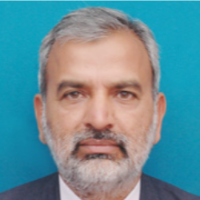
Zulfiqar Ali completed his M.S. in Environmental Engineering in 2005 from the National University of Sciences and Technology (NUST), Islamabad, Pakistan. Subsequently, he earned his PhD in Earth and Environmental Sciences from the University of the Punjab in Lahore, Pakistan. Over the course of a 32-year career in research and teaching at educational and research organizations in Pakistan, he has played a vital role in developing and improving a wide range of novel materials for industrial applications. His primary research interest is the mitigation and remediation of industrial pollution to help protect the environment. His research focuses on textile wastewater treatment, solar cells, lithium-ion batteries, and the effects of heavy metals on seed germination, where he has found his greatest passion. The motto that has guided his work throughout these years in science and technology hasn’t remained unchanged.