
Address: Hans-Grade-Allee 5, 12529 Schonefeld b. Berlin, Germany

Nano 2026
University of Salento, Italy
Title : Preparation of green nanotools as new photothermal agents in antimicrobial disinfection and cancer care
Abstract:
Nanomedicine represents the most interesting and promising applications of nanotechnologies that exploit the peculiar characteristics of nanomaterials in the development of new and more effective therapies, from antibacterial to antitumoral treatments. Nanoparticles-mediated photothermal therapy (PTT) is an emerging treatment that exploits the unique optical characteristics of nanoparticles to generate heat when irradiated with light in the near-infrared region (NIR). In this work, green gold nanoparticles, obtained from Lambrusco winery waste extract, were tested as possible NIR-triggered photothermal agents in PTT. Reducing sugars and polyphenolic compounds, naturally occurring in grape marc waste, can act as reducing and stabilizing agents in gold nanoparticles formation instead of conventional toxic compounds. UV-vis spectroscopy was used to follow gold nanoparticles formation, confirmed from the appearance of a plasmonic band at 535 nm. A second peak at 286 nm, typical of phenolic groups, demonstrated the presence of a polyphenolic layer on the nanoparticle surface, also confirmed from FTIR studies. TEM and XRD analyses revealed their crystalline nature with an average diameter of about 30 nm. The presence of a third peak in the near infrared region (750 nm) makes synthetized gold nanoparticles good photothermal agents with a temperature increase of about 22.1 ºC after 10 minutes of NIR laser irradiation. Biocompatibility studies on human fibroblasts and breast cancer cells (MCF-7) demonstrated good biocompatibility also at high concentrations (400 μg mL-1) since the cell viability remains superior to 70% during 72 hours of studies. Finally, antibacterial and antitumoral effects of synthesized nanoparticles were observed after NIR laser irradiation with a cell viability inhibition at higher concentration of 41.7% and 52.5% in S. Aureus and E. Coli, respectively, as well as a reduction of MCF-7 viability to 37%.
Biography:
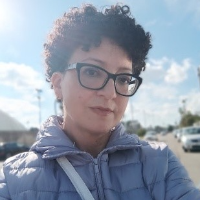
Dr. Lucia Mergola is an assistant professor at the University of Salento. She received her PhD degree (2013) from University of Salento in Materials engineering and structures, under the supervision of Professor Giuseppe Vasapollo (Emeritus Professor in Chemistry). She was a postdoctoral research fellow (2015-2021) in the Department of Engineering for Innovation at University of Salento. In February 2015, she contributed to the production of a published review titled “Molecularly Imprinted Polymer: Present and future prospective”, that received the Best Paper Award 2015 of the International Journal of Molecular Science (MDPI). Moreover, in May 2017, she received the PJ ZEON Award for outstanding paper published in Polymer Journal 2016, announced by the Society of Polymer Science Japan (SPSJ). In 2022 she started a new experience as Researcher in the Department of Engineering for Innovation at the University of Salento. A lot of scientific works were disseminated worldwide through participation in international congresses. The research interests are mainly focused on green metal nanoparticles preparation and their application in water decontamination and biomedical field; ion imprinted technology; molecularly imprinted polymers for biomarkers detection; molecularly screen-printed electrode.