Address: Hans-Grade-Allee 5, 12529 Schonefeld b. Berlin, Germany

Nano 2026
Kaunas University of Technology, Lithuania
Title : Development of 3-Ethylcarbazole-Based Host Materials for High-Performance OLEDs
Abstract:
In recent years, organic light-emitting diodes (OLEDs) have garnered significant academic and industrial attention due to advantages ranging from innovative product design possibilities to highly efficient and sustainable light sources. We have developed new D-A-D type host materials for the OLEDs, which combine carbazole electron donors with either diphenylmethanone or diphenyl sulfone electron acceptors, as well as one or two ethyl chains to improve film-forming properties. All the materials demonstrated the ability to form stable amorphous layers with high glass-transition temperatures. The compounds exhibit also high triplet energies, making them suitable as host materials for green phosphorescent and yellow thermally activated delayed fluorescence (TADF) emitters. Device studies revealed that the methanone-bridged hosts consistently outperformed their diphenylsulfonyl counterparts. The best device with the host for green phosphorescent OLED achieved an external quantum efficiency (EQE) of 16.5%. Furthermore, implementing blended co-host architectures markedly improved device performance, significantly enhancing external quantum efficiency and suppressing efficiency roll-off. A co-hosted device utilizing methanone-based host material achieved a peak EQE of 20.3%. These findings demonstrate both the intrinsic advantages of methanone derivatives as hosts and the synergistic benefits of co-host designs in achieving high-performance OLEDs.
Biography:
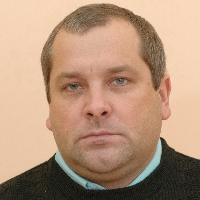
Saulius Grigalevicius received his B.S. degree in Chemical engineering, M.S. degree in Polymer chemistry and Ph.D. degree in Chemistry from Kaunas University of Technology (KTU), Lithuania, in June 1994, June 1996 and December 2000, respectively. From 2007 to 2008, he served as a Senior Researcher and an Associate Professor at KTU. From 2008 to 2010, he worked as a Leading Researcher and an Associate Professor at KTU. Since 2010, he has been working as a Professor and a Leading Researcher at the Faculty of Chemical Technology, KTU, Lithuania.