
Address: Hans-Grade-Allee 5, 12529 Schonefeld b. Berlin, Germany

Nano 2026
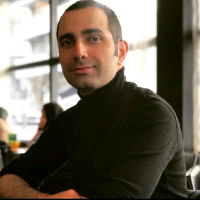
Method2Model, Iran
Title : Beyond Strong Signals: Making the Evidence-to-Decision Translation Gap Inspectable in Nanomedicine
Abstract:
Promising nanomedicines can produce meaningful delivery, molecular, or clinical signals without answering the question required for the next development decision. What, precisely, does a signal justify before a team commits to the next step? We retrospectively reconstructed five purposively selected, publicly documented decision episodes: BIND-014, MM-302 HERMIONE, DCR-MYC, Ferumoxytol/Ferabright, and the 2015 Onivyde approval. For each episode, we separated observation, interpretation, claim, evidence, decision, and commitment; assessed claim support; coded four transitions; and examined rival explanations. We kept evidence public before the decision (Strict Public Set A), evidence documented as actor-available at the cutoff (Documented Actor-Available Set B), and later evidence separate. Set B supplied the base reconstruction. At the primary evidence-to-decision transition, alignment was bounded for BIND-014, MM-302, and DCR-MYC: their observed signals did not close all the bridges to broader comparative, predictive, or clinical-benefit claims. This does not imply that their stopping decisions were unjustified. Alignment was preserved for Ferumoxytol/Ferabright's limited visualization indication and for the approved Onivyde regimen, without establishing formulation-only causality. With Strict Public Set A alone, all five episode-level classifications remained unresolved. The results concern these selected episodes; they neither estimate how often such gaps arise nor show improved decision outcomes. They suggest a practical check before commitment: define the decision question, the claim supported by the observed signal, and the evidence still needed to bridge the two.
Biography:
Ramyar Azar, M.D., is a physician, medical inventor, and founder of Method2Model. His work focuses on evaluating whether biomedical evidence supports specific development claims and decisions. Drawing on clinical practice and medical device innovation, he develops structured approaches to make assumptions, evidentiary limits, and decision requirements explicit.