
Berlin, Germany

Materials Science 2026
The University of Akron, USA
Title : Effective Partial Carbon Black Replacement by Pyrolyzed Soybean Hulls in Composites with High Density Polyethylene
Abstract:
Electrically conductive polymer composites have a variety of applications in electronics and packaging. This work focuses on effective (w.r.t. electrical conduction and mechanical properties) partial replacement of carbon black (CB) fillers by pyrolyzed soybean hulls (PSBH) in order to achieve a degree of ecological advantage. Low conductivity of biochar requires it to be coupled with higher conductivity fillers like CB. In this work, the effects of adding PSBH on the electrical conductivity and mechanical properties of high-density polyethylene (HDPE)/CB composites are presented. The results reveal that a certain percentage of the CB content (above 18 wt % CB level) can be replaced with PSBH, effectively providing higher conductivity even though the amount of the PSBH to be added needs to be higher than the amount of CB needed (i.e., 3% wt for CB vs 21% wt for PSBH) to achieve the same increase in conductivity. The reduction in tensile strength to achieve the same conduction level with and without adding (~ 21 wt %) PSBH is ~6% (a drop from ~50 MPa to ~47 MPa). The effects of processing parameters, including rate of mixing (rpm), mixing time, and processing temperature are also presented.
Biography:
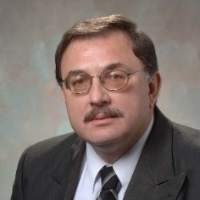
Dr. Erol Sancaktar Professor Emeritus (University Akron – UA, Aug. 2020), (Ph.D.; Eng. Mechanics, Virginia Tech) is Fellow of ASME, served as ASME Technical Committee Chair for Reliability Stress Analysis, Failure Prevention (1997-2008; 2013-), Associate Editor for ASME J. Mech. Design (1995-2006) and Medical Devices (2006-2013) and organized 30 Conferences. He taught at the Mechanical Eng. Dept., Clarkson University during 1978 to 1996 before joining UA in 1996 as Professor of Polymer Engineering and Professor of Mechanical Engineering (starting 2009). He edited 25 books, authored >120 journal articles and 30 book chapters. He delivered 249 technical presentations and has 4 patents.