


Trauma 2027
NAO ZKMU named after Marat Ospanov, Kazakhstan
Title : OsteoAngioScan: Artificial Intelligence-Based Digital Stethoscope for Osteoporosis and Falls Risk Prediction in Patients with Type 2 Diabetes Mellitus – A New Paradigm in Traumatology Prevention
Abstract:
Type 2 diabetes mellitus (T2DM) affects over 842,000 adults in Kazakhstan (IDF 2024). Patients with T2DM have 2-3 times higher fracture risk despite normal bone density – the "diabetic bone paradox." Falls cause >80% of fractures, yet existing calculators (FRAX) do not integrate diabetes-specific factors nor falls risk. 95% of primary clinics lack DXA equipment. We developed OsteoAngioScan, the first Kazakhstani AI algorithm for predicting osteoporosis and falls risk in T2DM patients. In a prospective cohort of 375 patients (age 40-70), we collected clinical, laboratory (HbA1c, vitamin D, PTH), functional (TUG, dynamometry), and ultrasound densitometry data. ML models (XGBoost) were trained with SHAP analysis. Results (n=150): AUC-ROC 0.89 (95% CI 0.84-0.94), significantly outperforming FRAX (0.67, p<0.001). Sensitivity 87.2%, specificity 83.5%. Top predictors: diabetes duration, HbA1c, TUG, vitamin D, grip strength. Patent No. 2026/0041.2 granted. Our solution operates on existing equipment, provides 30-second results, is explainable (SHAP), and ready for national scaling, potentially reducing fracture disability by 20-25%.
Biography:
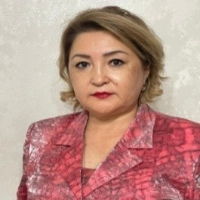
Professor Sakhipova Gulnara Zhetebaevna has 25+ years in preventive medicine at WKMU. She is scientific supervisor of OsteoAngioScan, author of Patent No. 2026/0041.2, and has published 50+ papers including Scopus Q1.Professor Sakhipova Gulnara Zhetebaevna has 25+ years in preventive medicine at WKMU. She is scientific supervisor of OsteoAngioScan, author of Patent No. 2026/0041.2, and has published 50+ papers including Scopus Q1.