

Address: Av. Diagonal, 161, 163, Sant Martí, 08018 Barcelona, Spain

WCPR 2027
University of Health Science, Turkey
Title : Structured Neurorehabilitation in Anti-IgLON5 Disease: Improvement in Craniovertebral Angle, Balance, and Functional Outcomes After a 15-Day Rehabilitation Program
Abstract:
Anti-IgLON5 Disease is a rare autoimmune-neurodegenerative disorder characterized by sleep disorders, bulbar dysfunction, gait disturbance, and axial postural abnormalities. Data on the effectiveness of rehabilitation in this disease are quite limited. This case report presents the results of a 15-day neurorehabilitation program applied to a patient diagnosed with Anti-IgLON5 disease four years ago and followed up under rituximab treatment in a neurology clinic. The patient was admitted to the rehabilitation program with complaints of pronounced cervical flexion posture, balance disorder, and functional limitation. A previous swallowing difficulty had improved markedly with an exercise program, and no muscle weakness was detected. The rehabilitation program consisted of postural re-education, cervical motor control exercises, balance training, gait training, and task-oriented functional applications. In pre- and post-treatment assessments, the Mini-Mental State Examination score increased from 24 to 28, the Barthel Index from 75 to 80, the Functional Independence Measure score from 85 to 97, the Patient-Specific Functional Scale score from 19 to 31, and the Berg Balance Scale score from 23 to 40. The craniovertebral angle increased from 37° to 44°, indicating improvement in cervical alignment. Standardized video recordings showed marked improvement in balance and postural control. This case suggests that structured neurorehabilitation may provide significant benefits on axial posture, balance, cognitive performance, and functional independence in Anti-IgLON5 disease. Further studies are needed to determine the optimal rehabilitation strategies for this rare disease.
Biography:
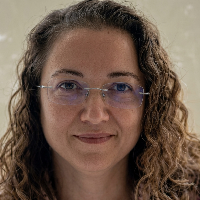
Sema Haliloğlu is a specialist in Department of Physical Medicine and Rehabilitation, Kartal Dr. Lutfi Kirdar City Hospital, University of Health Science, Istanbul, Turkiye. Her clinical and academic interests include neurorehabilitation, rare neurological disorders, and objective functional assessment. She focuses on developing structured rehabilitation protocols and documenting outcomes using clinical scales, imaging, and video analysis.