
Address: Zone Hoteliere 2 Allee Du Verger Roissy En France, 95700, Paris, France

Autism Congress 2026
Fluminense Federal University, Brazil
Title : The Social Place of People with Autism: An Analysis of Challenges and Opportunities for Inclusion
Abstract:
This research investigates the social place of individuals with Autism Spectrum Disorder (ASD) in contemporary society, analyzing the cultural and political dynamics that shape their experiences. The primary objective is to examine how prejudices and a lack of societal understanding influence the integration of autistic people across various contexts. Grounded in the paradigm of Neurodiversity and the biopsychosocial model, the study highlights the importance of the Self-Advocacy movement - pioneered by figures like Jim Sinclair and Temple Grandin - as a fundamental tool for empowerment and rights defense. The analysis also addresses the Brazilian legislative landscape, such as the "Berenice Piana Law" and the "Romeo Mion Law," which established the National Policy for the Protection of the Rights of Persons with ASD. However, a significant gap remains between legal recognition and effective daily practice in education and the labor market. The study concludes that social inclusion requires a shift from a purely medical perspective to a social one, valuing neurodivergence as a natural human variation. Effective inclusion demands a joint effort from Education, Health, and Social Policies, alongside a continuous commitment to demystifying autism. By listening to the voices of autistic individuals, society can build truly accessible environments that respect the singularity and autonomy of every individual.
Biography:
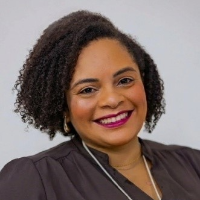
Fernanda Ribeiro Barros is a PhD in Media and Everyday Life from the Universidade Federal Fluminense (UFF), Brazil. She is a dedicated researcher in the fields of Pedagogy and Neuropsychopedagogy, with a focus on the intersection of media, digital narratives, and neurodiversity. As a public school teacher and an emerging voice in autism advocacy, her work explores how social platforms like Instagram shape the social place of autistic individuals. She is the founder of a project which seeks to promote social inclusion and awareness through digital communication.