
Address: Zone Hoteliere 2 Allee Du Verger Roissy En France, 95700, Paris, France

Autism Congress 2026
SPD Futurix LLP, India
Title : INIA: An International Neuro-Inclusion Accreditation Framework for Lifelong Participation, Accessibility, and Employment in Autism
Abstract:
Background: Despite growing awareness of autism spectrum conditions, significant barriers remain in education, employment, public services, and community participation. Existing approaches often emphasize diagnosis and intervention while overlooking the need for systemic frameworks that promote accessibility, inclusion, and meaningful participation throughout the life course. There is a pressing need for internationally adaptable standards that translate neuro-inclusion principles into measurable practices across organizations and institutions.
Objective: This paper introduces the International Neuro-Inclusion Accreditation (INIA) framework, a proposed standards-based model designed to support autistic individuals and other neurodivergent populations across educational, professional, and public environments. The framework aims to establish evidence-based benchmarks for accessibility, inclusion, sensory considerations, communication, and career development.
Methods: INIA adopts a multidisciplinary approach combining principles from universal design, accessibility, occupational inclusion, sensory environments, assistive technologies, and organizational governance. The framework proposes assessment domains covering physical and digital accessibility, inclusive communication, sensory accommodations, workforce participation, leadership commitment, and continuous improvement mechanisms. The model further incorporates stakeholder engagement involving autistic individuals, families, educators, employers, researchers, and policymakers.
Results: The proposed framework establishes a structured accreditation pathway that enables organizations to assess, implement, and demonstrate neuro-inclusive practices. INIA seeks to support improved educational outcomes, increased employment participation, enhanced workplace retention, and greater social inclusion for autistic individuals. By introducing measurable indicators and certification mechanisms, the framework aims to encourage organizations to move beyond awareness initiatives toward sustained institutional change.
Conclusion: INIA represents a novel approach to neuro-inclusion by positioning accessibility and participation as organizational responsibilities rather than individual challenges. The framework has the potential to facilitate international collaboration, inform policy development, and promote more inclusive ecosystems for autistic individuals across the lifespan. Future work will focus on pilot implementation, validation studies, and engagement with global standards and autism communities.
Biography:
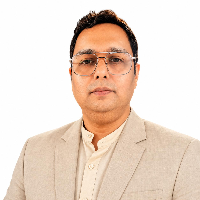
Dr. Sandip P. Dhurat is an innovator, author, and founder of SPD Futurix LLP, Mumbai, India, with more than two decades of experience spanning technology, innovation, digital transformation, sustainability, and human-centered systems design. He holds degrees in Computer Engineering and Business Administration and has been awarded an Honorary Doctor of Letters (D.Litt.).
Dr. Dhurat is the author of 32 books and the inventor of 29 patents covering areas such as clean energy, accessibility, artificial intelligence, and sustainable technologies. His work extends across green hydrogen systems, circular economy frameworks, neuro-inclusion, and future mobility solutions.
He is the creator of the International Neuro-Inclusion Accreditation (INIA), a proposed standards framework designed to promote accessibility, sensory inclusion, and equitable participation for autistic and neurodivergent individuals across educational institutions, workplaces, public services, and built environments. His research interests include autism, neurodiversity, inclusive design, assistive technologies, and lifelong participation.
Dr. Dhurat is a member of the Hydrogen Association of India and serves as an Independent Hydrogen Expert for Vietnam's TCVN/TC 197 Hydrogen Technologies Committee. Through his interdisciplinary work, he advocates for practical, scalable, and standards-based approaches that bridge technology, sustainability, and social inclusion.